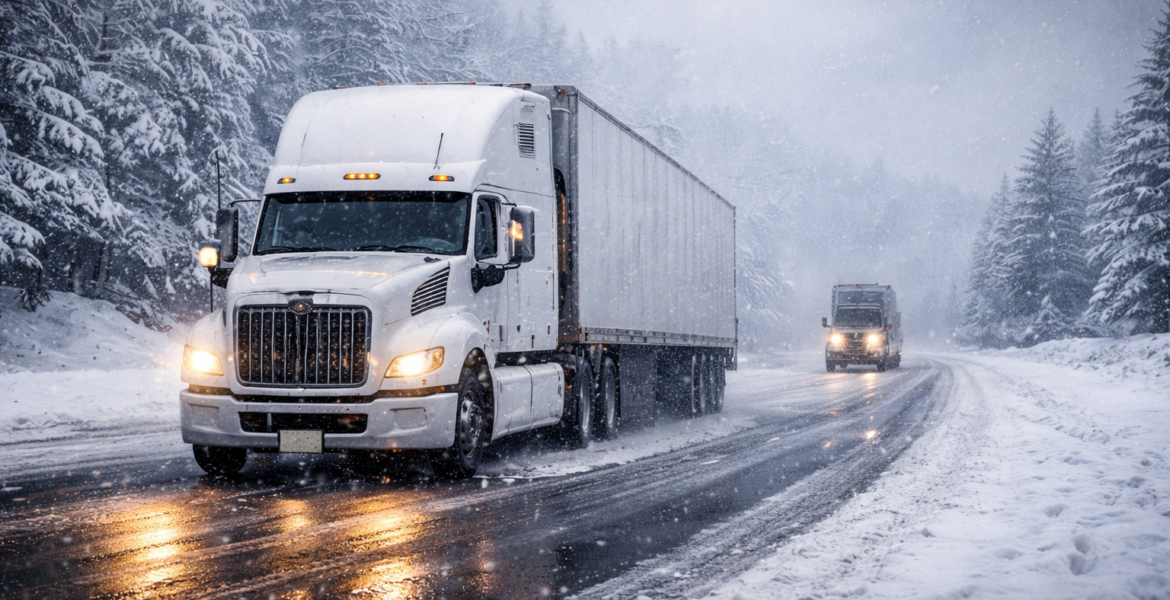
Drivers of many regions realize in winter that the usual routes they take are no longer the same as they used to. They feel the distances are longer, the delivery times are shorter, and the delays are accumulating, and the one that was a stable weekly plan now turns into a threat to their weekly pay. The root cause is not the winter itself but the inability to change the route structure to the winter conditions.These transport route changes are not optional adjustments, but necessary structural shifts required to maintain stability during winter operations.
Winter route restructuring involves not driving less or accepting lower standards. It is about the regional route construction so that the routes efficiency, factors that lead drivers to safety stability, and weekly income are all permanent although it is cold, there is slow processing or other operational friction. Drivers who do not change routes end up working more with lower payment, while those who restructure patriotically both safety and recompense.
In the following, we will explain the best approach to regional route optimization during winter operations without extra costs to driver weekly pay. Our focus will be on the so-called matching route planning, winter scheduling logic, and logistics implemented adjustments, and realistic pay protection strategies that will effectively work in ordinary truck operating conditions.
Winter Restructures Conventional Road Models
Most of the regional routes are structured on regular conditions. That means the road construction will be stable, parking will be available consistently and delivery times will be predictable. In winter, transportation is constantly different.
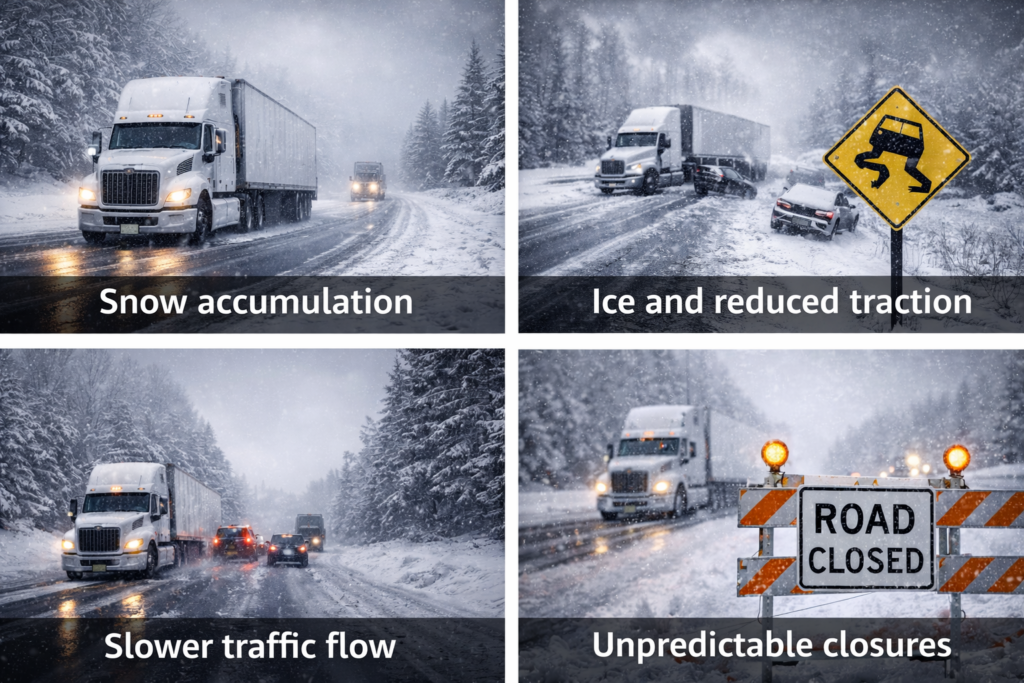
Cold weather routes introduce unavoidable variables:
- Snow accumulation
- Ice and reduced traction
- Slower traffic flow
- Unpredictable closures
Drivers often try to survive the winter by running the same routes they used in summer. As a rule, this leads to schedule compression, missed delivery windows, increased stress, a drop in performance etc. that all decrease weekly pay. The winter logistics portion should be broader not tighter.
Restructuring regional routes starts by realizing that the winter operations per mile have a different weight. The fuel burned is higher, the speeds are lower, and the time spent waiting at docks is longer. If the routes are not corrected to take into account these facts, the handling of cargo is going to be inefficient. The outcome will be longer working hours and fewer miles paid for as well as driver earnings that could not be dependent on anything.
The central idea is that the winter or any other factor will not decrease the value of the driver. Still, you need a different route structure to maintaining weekly income. After this is recognized, restructuring turns into strategic rather than reactive decisions.
Weekly Pay Is a System and Not a Route
One of the less visible and sometimes more damaging assumptions about the operation of drivers during the winter is that the weekly pay assumption is also individually load-based. However, the actual relations of the fleets impact the plan weekly pay time is also weekly pay protection.
The best system operation on a route is to have it going in a sequence instead of being isolated. The new structural model of winter route will mean looking at the routes as parts of a weekly boosting system of the driver pay instead of the original one.
This requires understanding:
- Where delays are most likely
- Where extra flexibility is required
- How route changes affect downstream opportunities
Drivers who only think about daily mileage lose their weekly income in the cold months. Those, however, who take the initiative to secure the weekly pay by means of route optimization usually excel long-term. Shifting to this mindset is crucial for off-season route planning.
Winter scheduling should be designed to prioritize the protection of predictable income rather than optimizing daily output. That may mean less mileage on certain days in return for better transitions, smoother recovery, and stronger weekly totals. Driver pay stability therefore comes from reduced volatility instead of pressure.
Summer Route Logic vs Winter Route Logic
| Aspect | Summer Routes | Winter Routes |
| Average speed | Stable | Reduced |
| Delay probability | Low | High |
| Parking availability | Predictable | Uncertain |
| Schedule flexibility | Minimal | Required |
| Weekly pay stability | Mileage-driven | Structure-driven |
Hacks for Routing During Winter
The first step in successful winter route restructuring is to eliminate high-risk segments from daily transport. Cold weather routes that include mountain passes, secondary roads, and under-maintained regional highways seem to be the right choice on paper but bring about waste of time and money.
Key winter routing adjustments include:
- Eliminating high-risk road segments
- Favoring reliable corridors over shorter paths
- Avoiding under-maintained regional highways
A good recommendation is to bring together more routes with route discrepancies in a single corridor, thus avoiding shorter unreliable lines. The consolidation of the route means getting rid of unintended stops, line delays, and driver’s emotional stress. Winter transport often prioritizes reliability rather than distance.
Another important adjustment is changing start times. Later starts allow road maintenance crews to clear roads. This minor route planning change significantly reduces delays and improves weekly pay stability.
Route restructuring also means tightening regional loops. Instead of long scattered routes, regional logistics favor tight zones that reduce deadhead, simplify scheduling, and boost operational efficiency.
Protecting Weekly Pay Through Master Scheduling
The shield against winter hardship is not routing alone — it is scheduling.
A realistic winter schedule includes:
- Built-in buffers for weather delays
- Allowance for slower traffic
- Recognition of increased fatigue
These buffers are not wasted time. They are insurance against missed appointments and unpaid delays. Drivers who build buffers protect their weekly pay more effectively.
Pay guarantee, when available, help stabilize income during unavoidable disruptions. They are not a response to poor performance but a structure that supports winter operations.
Clear communication with dispatch becomes critical. Explicit discussion of winter route adjustments and delivery flexibility directly protects driver compensation.
Route Strategy Impact on Weekly Pay
| Strategy | Short-Term Effect | Weekly Pay Impact |
| Same summer routes | Faster start | Pay erosion |
| Compressed schedules | Higher stress | Unstable pay |
| Restructured winter routes | Slower days | Stable income |
| Buffered scheduling | Fewer surprises | Protected pay |
Regional Route Optimization vs Pushing Harder
One of the most damaging winter mistakes is pushing harder to compensate for slower conditions. This approach backfires.
Fatigue increases. Errors multiply. Safety margins shrink.
Regional route optimization is about rhythm, not pressure. Steady routes, predictable stops, and manageable distances support consistent performance and stable weekly income.
Winter-optimized routes often trade peak daily mileage for weekly consistency. This is a deliberate and professional decision. Seasonal route planning favors regularity over intensity.
Logistics planning must reflect winter realities. Expecting summer performance in winter leads to instability. Adjusting expectations is professionalism, not weakness.
The Extended Advantages of the Reorganization of Winter Routes
Drivers who restructure routes in winter develop long-term advantages:
- Improved situational awareness
- Better anticipation of disruptions
- Proactive income management
These skills improve carrier performance and individual value.
Clear communication and reliable winter delivery strengthen relationships with dispatch and customers. This often results in better routes and compensation when conditions improve.
Winter route optimization protects health, safety, and income simultaneously. Reduced stress, better recovery, and stabilized weekly pay make winter operations manageable rather than exhausting.
Final Thoughts: Winter Is Not the Terms of Trade — Inflexibility Is
Winter does not have to mean income loss or constant struggle. The real enemy of weekly pay is failing to adapt route structure to seasonal change.
Drivers who approach winter with a restructuring mindset — not a survival mindset — protect route efficiency, compensation, and career longevity.
In trucking, winter rewards those who optimize routes instead of fighting conditions.
FAQ: Winter Route Restructuring and Weekly Pay Protection
Why don’t seasonal roadways operate in the same way in winter?
Seasonal roads, which are open only during the summer and spring, do not operate in the same way in winter as the conditions for the winter season compel them to work differently. The vehicle speed is decreased, congested delaying trips are increased, unreliable parking occurs, and the loading time gets lengthier.
Are seasonal routes that are busy during summer made for their durability to winter logistics?
Summer-effective tracks are not designed to function under the heavy burden of the winter-added logistics, that are so effective in summer.
In what way does route reshaping relate to the wage of a driver?
Changing the routes aligns winter reliability with the distance and time. Drivers manage to meet their weekly totals although sometimes the distance is different from the plan.
Does the abbreviation of miles mean that the winter route optimization is operating safer freight?
Absolutely not! The winter route optimization indicates that you will avert the route containing logistics risks and one that is uncomplicated.
During winter, the route simplification and the forecast of the goods movements, which are constant, are becoming much more important than the longest daily range.
Can scheduling be utilized for ensuring not a single loss of employee pay?
Pay stability is achieved through good scheduling. Winter schedules must have additional time built into them to absorb any delays which should not be canceled due to additional appointments, unpaid time, or extra back-hauls.
Does driving on winter routes require income guarantees?
Indeed, they do. Income guarantees not only prevent fluctuations in pay and during times of disruption but they also allow drivers to keep their salaries unaffected even when temporary weather or logistics conditions occur that reduce productivity.
How can drivers manage their time to drive the winter routes?
Scheduling the trip a little later is the best solution to reduce the time spent on winter routes. This helps the road crew to clear the road and avoid potential hazards that might occur in the early morning hours. A small timing change could save a lot of time otherwise lost.
What is the meaning of looping near the short time for the winter?
Tiny, easy-to-manage loops are the best solutions to deadhead headaches, route planning simplification, and the boosting of the operational efficiency. The option in winter is straightforward: either to be consistent or to apply complex routing of advanced quality.
Is the trick to fight against winter flight delays a fight strategy?
No, it is not. This miscalculation is the source of increased fatigue, risk, and mistakes. The goals of winter route optimization are not to work harder but to have a steady rhythm, reliability, and controlled outputs.
Is winter route restructuring part of the drivers’ long-term performance too?
The drivers get better at planning, communication with dispatch and at the same time they increase the skills for proactive income management that are helping them throughout all seasons.
What is the most serious mistake drivers make while driving winter routes?
The main factor contributing to potholes in summer is the fact that the road does not return to its share. It produces stress, value loss, operational reductions, and lack of flexibility. Winter is just the main reason.
Leave a Reply