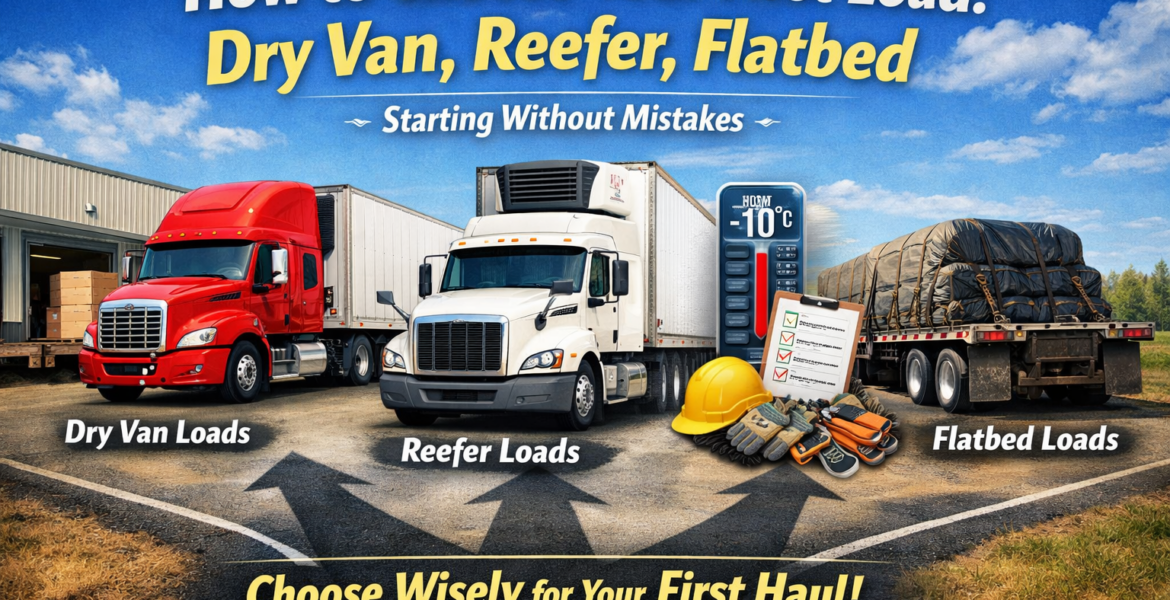
Trucking – Flatbed vs Reefer vs Dry Van – Which is better??
Your first load in trucking is more than just freight; it is the cornerstone of how you will learn your trade. Many beginner truckers and first-time owner-operator commit their earliest mistakes not because they are bad drivers, but because they select the wrong load type for the starting phase. Dry van, reefer, and flatbed each have unique ways of operating, risks, and learning curves.
Choosing the wrong freight type for your first load can make you stress out and lose money that you could otherwise have used to start off your trucking career smoothly. This guide describes the right process for selecting your first load, the way each type of freight behaves during real operations, and the measures to avoid the most frequent starting mistakes in the transportation sector.In the transportation industry, a driver’s first load often determines how quickly they adapt to dispatch systems, scheduling logic, and real operational workflows.
Is the Choice of Your First Load Type That Important?
Novice drivers always think that a load is but a thing to pull from point A to point B. In the end, your first load determines:
- The complexity of your logistics
- The level of pressure you receive from dispatch
- The amount of variables you have to manage simultaneously
- The rapidity with which mistakes turn into losses
Learning how to choose load correctly at the very beginning helps a new driver reduce operational pressure and avoid preventable first-load mistakes.
For a beginner trucker, it is much more essential to grasp the fundamentals of the cargo transport than chase after high-paying freight. The best first load is not always the most profitable one but is the one that allows a driver to err without being penalized heavily.
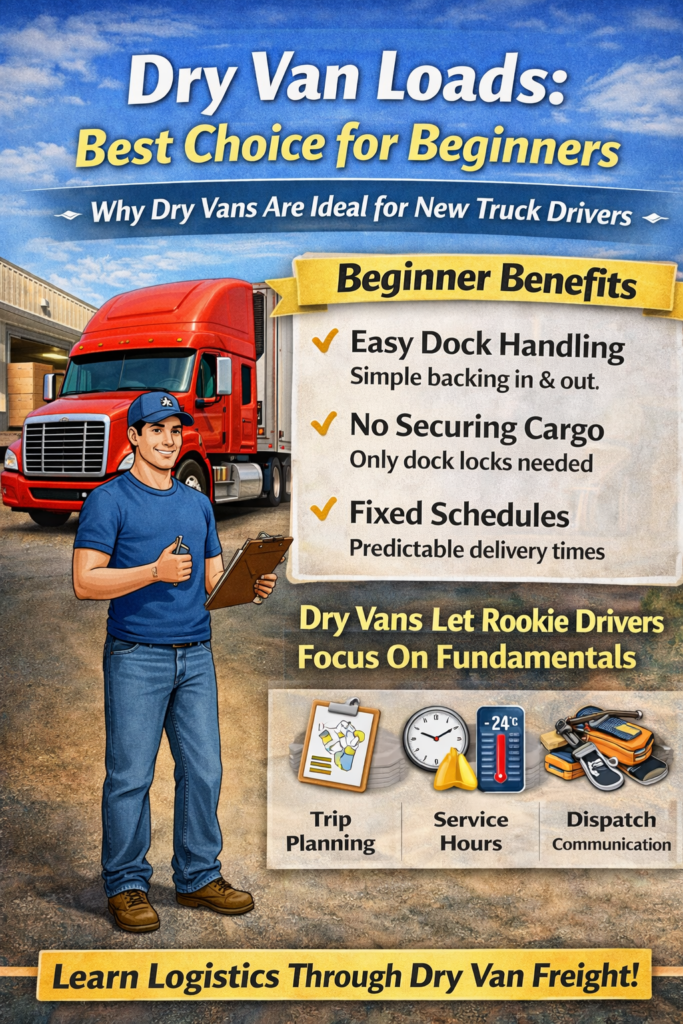
Analysis of the Three Major Load Types
Before making a choice, it’s significant to understand what you are actually measuring up against.
Dry Van Loads
- Enclosed trailers
- General freight
- Handle meager rigorous requirements
- The most forgiving of the three for beginners
Reefer Loads
- Temperature-controlled freight
- Delivery times are strangely defined
- Consecutive monitoring
- More accountability and pressure
Flatbed Loads
- Open-deck freight
- Securing the cargo is your responsibility
- Exposure to bad weather
- High physical and regulatory demands
Every load type gives you a chance to learn different skills. The trick is to pick the one that suits the knowledge you have at the moment.
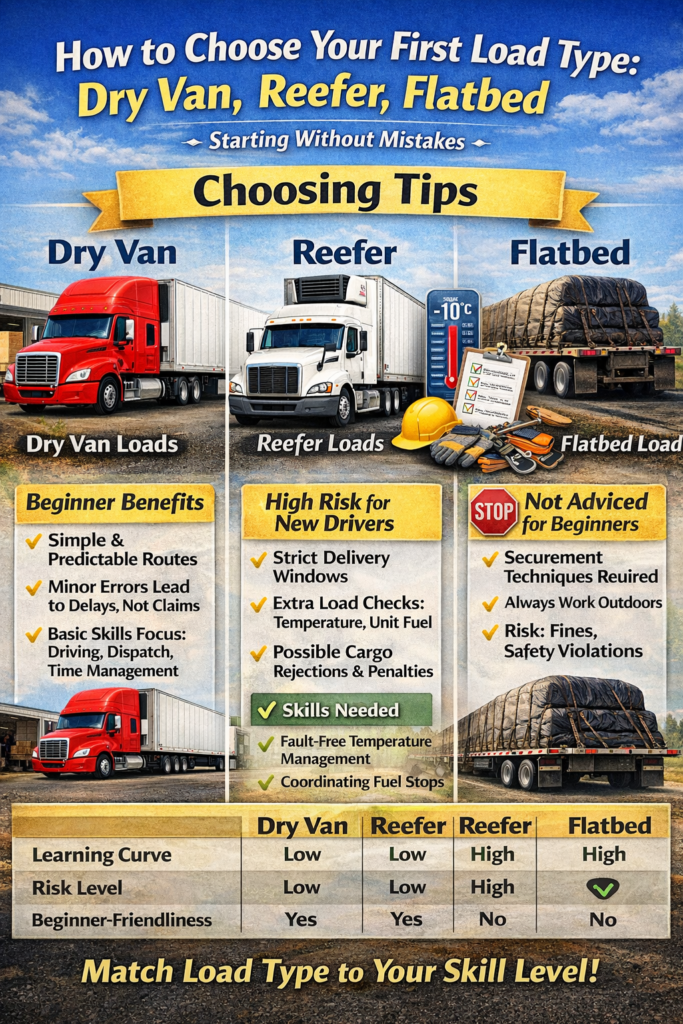
Dry Van: The Best and Most Secure Way for New Drivers
By and large, dry van loads are the number one recommendation for brands new to the trucking industry.
Reasons Why Dry Van is Ideal for Newbies
Dry van freight is the beginner’s interest in the trucking business without the hassle:
- No cargo securing requirements except for dock locks
- No temp control systems
- Less delivery variables
- More or less fixed dispatch schedules
This enables a rookie truck driver to focus on fundamental skills:
- Trip planning
- Hours of service management
- Communication with dispatch service
- Time management
Frequent Dry Van Starting Mistakes (And Why They’re Acceptable)
Dry van freight is basically forgiving even if you miscalculate unloading time or miss a dock appointment. Most of the errors lead to delays rather than rejected freight or claims.
Dry van is the unmatched mode of learning for logistics.
Ruling:
If your purpose is to learn how trucking really functions without extreme pressure, then dry van would be, in fact, your best and surest choice.
Reefer: High Reward, High Risk, High Stress – First Load Choice
Reefer freight attracts new drivers because it brings in high revenue. However, reefer loads take the place of the most common first load mistake when chosen too early.
Why Reefer Is Hazardous for New Drivers
Reefer freight brings fresh variables into the picture all at once:
- Temperature control
- Pre-trip unit checks
- Fuel monitoring for the reefer unit
- Strict delivery times
- Sensitivity of cargo
A rookie truck driver averts the fact that he or she is now only responsible not for driving but for protecting the cargo.
The Hidden Danger of Opening a Reefer for Newcomers
Only one small mistake like the wrong temperature set point, missing fuel stop, or late arrival can trigger the following consequences:
- Rejected loads
- Cargo claims
- No payment
- Dispatch conflicts
Reefer freight is a matter that even the top drivers respect. Although, for a first load, it can often be the cause of more stress than benefit.
As long as you grasp the way dispatch works and you are able to comply with operational discipline, then you are better off with reefer.
Flatbed: Heavy Skills and Physically Exhausting
Flatbed freight attracts those people who want to come out on top easily, but flatbed drivers are expected to have a set of skills that novices often do not have.
What Makes Flatbed Unreasonable at a First Load
Flatbed trucking requires:
- Knowledge of how to load secure
- DOT-compliance reel and chain requirements
- Driving in severe weather
- Physical work at pickup and delivery
Flatbed loads amplify mistakes faster than any other freight type due to their physical, legal, and safety-sensitive nature.
Mistakes in flatbedding are rarely minor. A failure to secure properly can result in:
- Fines
- Out-of-service violations
- Safety risks
Flatbed and the New Truck Driver
Flatbed can be a great area of work, but as a starting point you shouldn’t do it unless you have:
- Training on how to secure the load
- Someone to teach you hands-on
- A dispatch team that can be lenient with you
Verdict:
Flatbed is not a beginner-friendly type unless you are specially trained for it.
Load Types Comparison for Your First Load
| Load Type | Learning Curve | Risk Level | Beginner-Friendly | Operational Complexity |
| Dry Van | Low | Low | Yes | Simple |
| Reefer | Medium–High | High | No | Complex |
| Flatbed | High | High | No | Physically & legally demanding |
The Dispatch’s Influence on Your First Load Selection
The choice of dispatch matters as much as your load type. A good dispatcher understands that newcomer truckers prefer stability to pressure.
As far as the first loads are concerned, the dispatcher should:
- Not allow multi-stop complication
- Give realistically long appointment times
- Reduce deadhead and unnecessary stress
- Match freight to your experience level
A reefer freight dispatcher or flatbed dispatcher who considers a beginner as a veteran is a real reason for driver frustration.
Owner-Operator vs Company Driver: Is This A Factor?
Company Driver
- Low financial risk
- Highly recommended dry van
- Systems should be learned first
Owner-Operator
- Each mistake equals real money
- Dry van is still the safest entry
- Cash flow is more important than RPM
Regardless of status, the best first load is the one that minimizes variables.
Beginners’ Guide on Selecting a Load Based on Freight Types, Not Rates
A rookie mistake that often occurs in the trucking industry for the first load is the choice of freight based purely on the rate advertised, failing to understand freight types performing in real operations.
Choosing freight at the early stage defines not just earnings, but how quickly a driver understands dispatch flow and real-world logistics.
By selecting a load, you do not merely choose cargo — you also choose a workflow. Different cargo types create different operational demands. A few truck loads are easy-going about the delays, yet some turn even simple setbacks into claims, unpaid miles, or dispatch miscommunications.
Beginners often underestimate how much operational complexity stacks when freight selection does not match experience. Mistakenly selecting freight at the beginning can slow development instead of speeding it up.
Smart learners align freight selection with their current capability rather than future ambition.
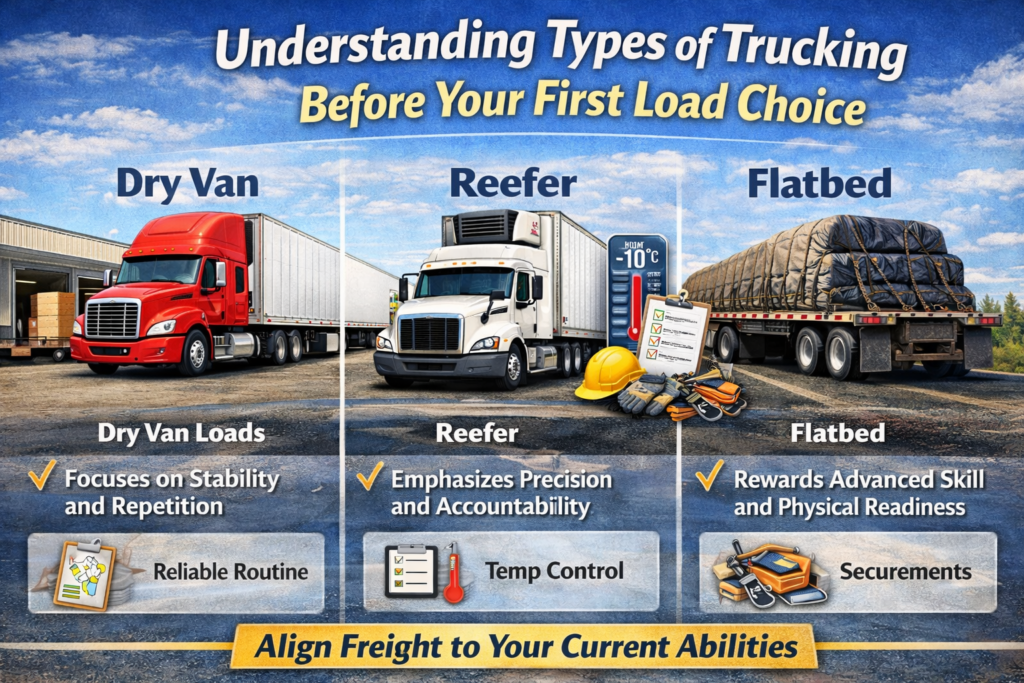
Understanding Types of Trucking Before Your First Load Choice
Understanding different types of trucking helps beginners align equipment, dispatch expectations, and learning pace before committing to a load.
Before you pick your first freight haul, you need to be aware that various trucking types exist not only by equipment but also by operational philosophy.
Dry van trucking focuses on stability and repetition.
Reefer trucking emphasizes precision and accountability.
Flatbed trucking rewards advanced skill and physical readiness.
The basic solution to a first load problem is to align freight selection with the current stage rather than the long-term ambition.
Last Thought
Each and every successful truck driver has a memorable first load. Your first load is also your first practical lesson in freight transport , where theory meets real deadlines, dock procedures, and dispatch pressure.Make sure that it teaches you how to operate properly, not how to repair failures caused by preventable mistakes.
Cargo type is only half the decision — location and market conditions shape your real opportunities. Here are the top states for truck drivers with the best balance of pay and stability.
The trucking business rewards patience, structure, and smart freight choices far more than rushed ambition.
FAQ: Deciding on Your First Load Type in Trucking
What do you think is the most frequent first load error made by newly inducted truck drivers?
The majority of first load stumbling blocks people experiencing is selecting cargo solely according to the sum of money, rather than considering if it would be difficult for them to load it. Novice drivers usually do not realize that once the parcel loading does not fit the driver’s experience, the problem becomes real quick a snowball effect.
What is the dry van the best first load for the first time drivers?
Dry van cargo is a no-brainer as it is less variable, has easy dock procedures, and drivers do not get penalized much for their mistakes. This way, the new drivers have more chances to train dispatch flow, time management, and route planning with little pressure.
Can a driver take reefer loads as a first load?
Yes, it is true under some circumstances, but it is not advisable unless the driver already is well versed in dispatch discipline and process control. Reefer loads are hardcore and bring along with them problems such as temperature management, cargo liability, and strict timing, and all these together are first-load magnifiers of stress.
Why are flatbed loads possibly crucial risks as a first load type?
Flatbed loads primarily would need a cargo securement process, which needs to be advanced, a lot of physical labor, and a full-time compliance with the regulations. Flatbed trucking problems often lead to safety violations instead of mere delays, so it is clearly not the thing for beginners.
Is dispatch the one that tells me which first load I should take?
Yes. The rivalry of the good dispatcher always comes with finding the freight for a driver fitting his experience best. A good dispatch support really cuts the multi-stop complex worries, gives a more realistic appointment time, and considerably lowers the stress of novice drivers.
Should owner-operators and the company drivers pick a different first load?
Going for dry van freight both for company drivers and owner-operators is the best practice. Still, while it is true that owner-operators are at a greater risk financially, keeping things simple and predictable for the first load is even more essential for them.
Is the load that pays the most the best first load ever?
No. The first load is most correctly the one that has the least variables but it is not the one that has the highest rate. A lot of learning at the beginning is purely based on constant work and manageable controls rather than on temporary income.
Leave a Reply